Blocked, not hidden
The request is refused before it is sent, using Chrome’s own rule engine. Nothing is downloaded and nothing gets a chance to run — which is a different thing from a script that hides the element afterwards.
product / sodium
Trackers refused before the request is made. Ads and trackers blocked at the network layer, the holes they leave closed up, and the next page already loading.
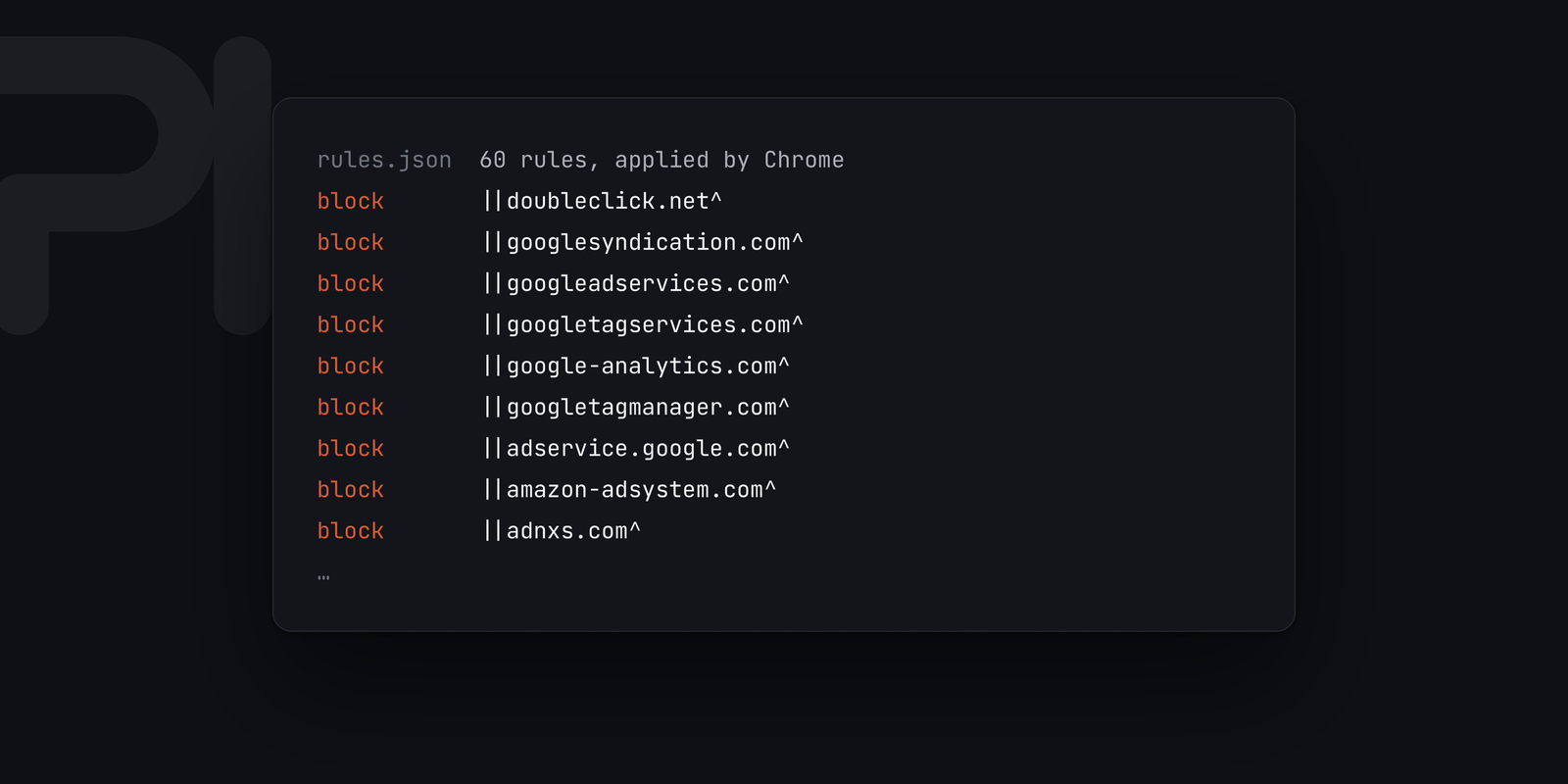
Sodium · the rules Chrome applies
what it does
The request is refused before it is sent, using Chrome’s own rule engine. Nothing is downloaded and nothing gets a chance to run — which is a different thing from a script that hides the element afterwards.
Blocking a banner leaves the space it sat in. Sodium collapses the empty containers, the sticky bars and the overlays that have nothing left to show.
The page you are heading for starts loading while the pointer is still travelling.
There is nothing to set, and that is deliberate: a blocker with a control panel is a blocker asking you to tune it, and every dial is a way to break a page without knowing you did. The toolbar badge counts what it refused on the page you are looking at.
declarativeNetRequest — Chrome applies the rules itself, so the extension never sees your traffic.Not a separate download, and never a Chrome Web Store listing. The Hub holds whichever extensions your plan covers and opens a browser with them already loaded.
They run in the Chrome the Hub opens, not the Chrome you already have open. Chrome refuses the debugging pipe on a logged-in profile — it would expose cookies and saved passwords — so a separate profile is the only configuration Chrome allows. And because an extension loaded that way is not remembered across a restart, the Hub is what starts that browser each time.
When a plan stops covering Sodium it stays installed and keeps working. It simply stops receiving updates.